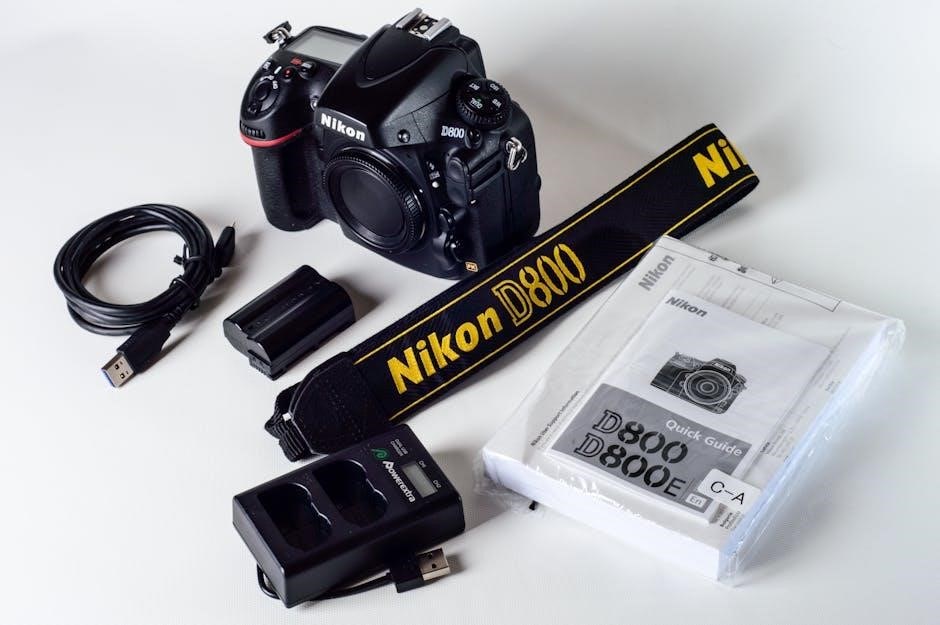
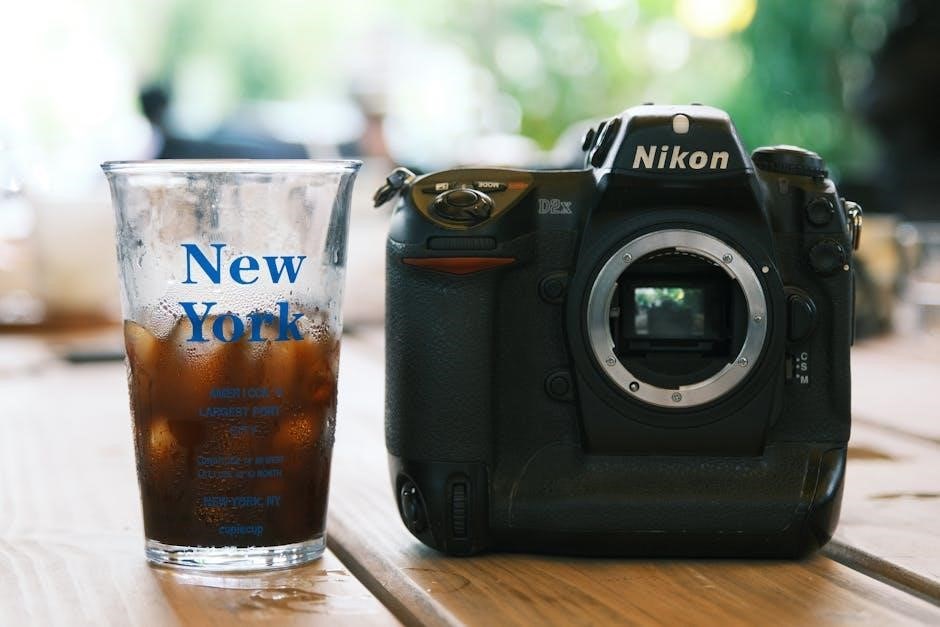
The Nikon D200, a professional-grade DSLR, offers a robust feature set detailed within its comprehensive user manual, prohibiting reproduction and subject to change.
Overview of the D200 Camera
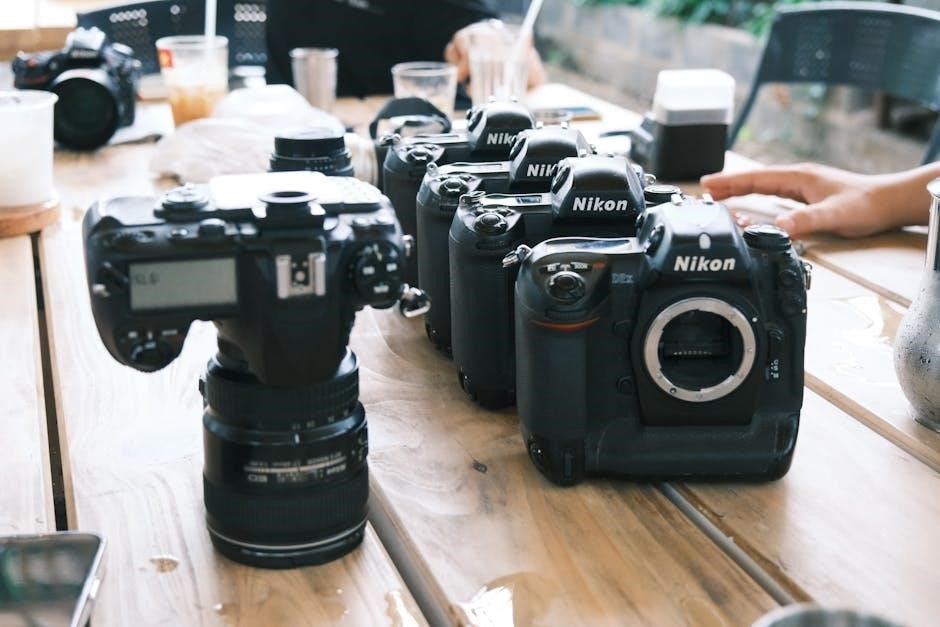
The Nikon D200 stands as a significant digital SLR, lauded for its impressive 10.2-megapixel sensor capable of resolving extremely fine detail at 90 line pairs per millimeter. This camera bridges the gap between enthusiast and professional equipment, offering a compelling blend of performance and features. The D200’s capabilities extend to rapid shooting, supporting 5 frames per second for action photography.
Its versatile shooting modes – Program Auto, Shutter Priority Auto, Aperture Priority Auto, and Manual – cater to diverse photographic needs. The camera’s manual focuses on detailed specifications for disassembly and repair, outlining component details. Furthermore, the D200 boasts compatibility with Nikon Speedlights, including those from the SB 9XX line, functioning as both master and remote units. The manual highlights the camera’s superior manual focus indicator, often praised by professionals.
Target Audience and Intended Use
The Nikon D200 primarily targets advanced amateur photographers and professionals seeking a capable and versatile DSLR. While not positioned as a direct replacement for higher-end models like the D3, it offers a substantial upgrade from entry-level cameras such as the D60. Its robust build and extensive feature set make it suitable for a wide range of photographic disciplines, including action, portraiture, and landscape photography.
The camera’s manual details its functionality for both experienced users and those transitioning from film or simpler digital systems. Its compatibility with Nikon Speedlights expands its utility for studio and on-location lighting. The D200’s ability to capture fine detail and its fast frame rate make it ideal for demanding applications, as outlined in the repair manual’s technical specifications.
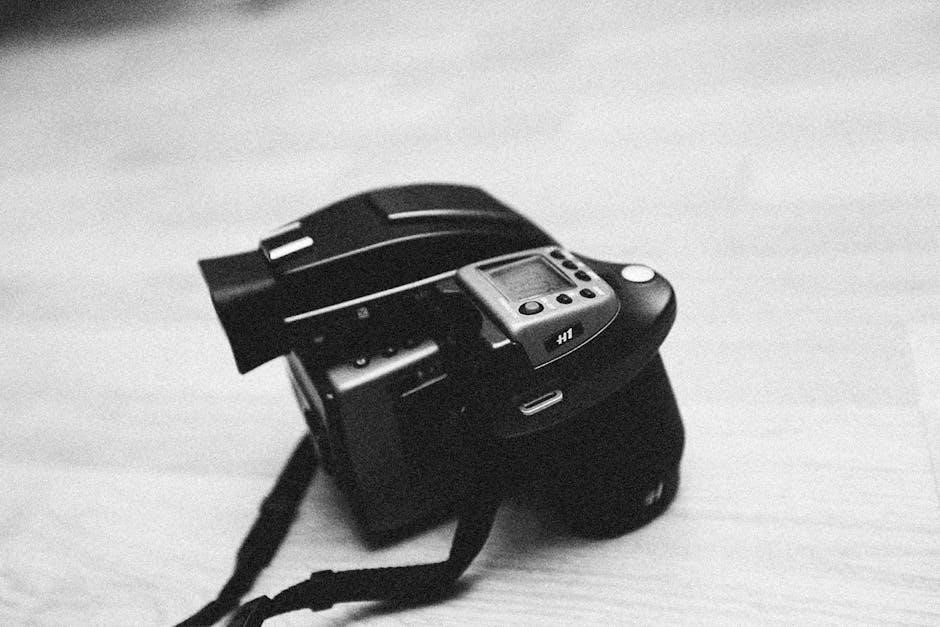
Technical Specifications
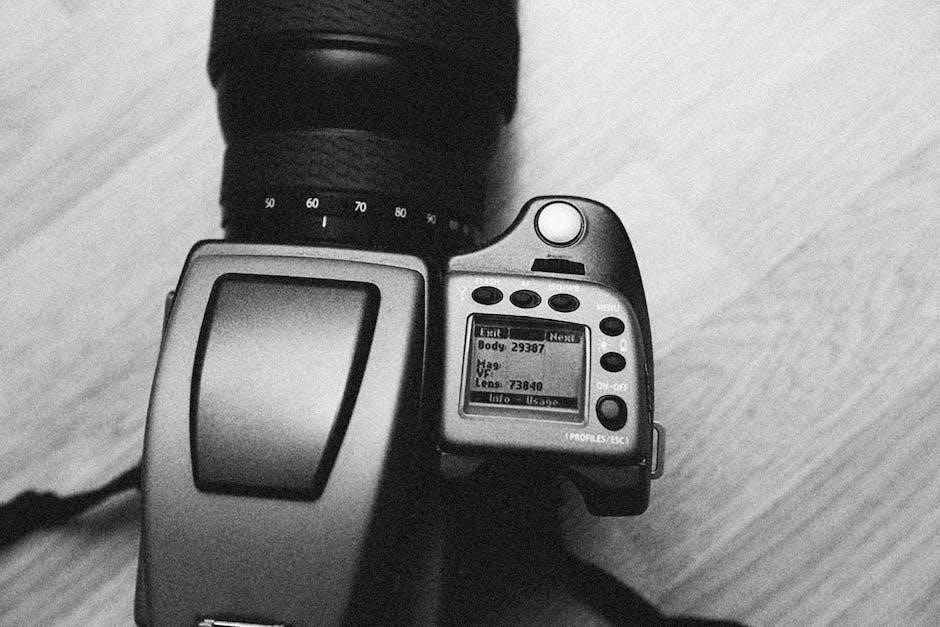
The D200’s specifications, detailed in repair documentation, include a high-resolution sensor capable of 90 line pairs/millimeter for exceptional detail capture.
Sensor and Image Processor
The Nikon D200 boasts a high-performance sensor, capable of resolving extremely fine detail at 90 line pairs per millimeter (90 lp/mm). This impressive resolution allows photographers to capture images with exceptional clarity and sharpness, making it suitable for demanding applications like professional photography and large-format printing. The camera’s sensor technology, as outlined in available documentation, delivers a substantial 2.7-megapixel output, contributing to the overall image quality.
Furthermore, the D200’s image processor works in tandem with the sensor to ensure efficient image processing, contributing to fast throughput and supporting a continuous shooting rate of 5 frames per second. This combination of sensor and processor power enables the camera to handle complex scenes and deliver high-quality images consistently, even in challenging shooting conditions. The manual details these capabilities, emphasizing the camera’s ability to produce detailed and vibrant photographs.
Image Size and Quality Settings
The Nikon D200 provides photographers with extensive control over image size and quality, as detailed in its accompanying manual. Users can select from a variety of resolutions and compression levels to tailor image output to their specific needs. These settings directly impact file size and image detail, allowing for optimization based on intended use – whether for web display, print, or archival purposes.
The camera supports multiple JPEG compression levels, offering a balance between file size and image quality. Additionally, photographers can choose to shoot in RAW format, preserving maximum image data for greater flexibility during post-processing. The manual thoroughly explains each setting, guiding users to make informed decisions about image size and quality, ensuring optimal results for diverse photographic scenarios and workflows.

Autofocus System
The Nikon D200 boasts a sophisticated autofocus (AF) system, meticulously explained within the camera’s detailed manual. This system utilizes 11 focus points, providing photographers with precise control over focus selection across the frame. The manual clarifies the different AF modes available – Single Servo AF (AF-S), Continuous Servo AF (AF-C), and Auto Servo AF (AF-A) – each suited for different shooting situations, from static subjects to fast-paced action.
Users can customize AF behavior, adjusting sensitivity and tracking responsiveness. The manual also details how to utilize dynamic-area AF, allowing the camera to automatically select focus points based on subject movement. Understanding these settings, as outlined in the documentation, is crucial for achieving sharp, well-focused images consistently.
Shooting Modes
The D200 offers Program Auto (P), Shutter Priority (S), Aperture Priority (A), and Manual (M) modes, thoroughly described in the user manual for versatile control.
Program Auto (P) Mode
Program Auto (P) mode on the Nikon D200 provides a balance between camera control and convenience, as detailed in the camera’s manual. This mode allows the camera to automatically select both the shutter speed and aperture, optimizing settings for a variety of shooting situations. However, unlike fully automatic modes, Program Auto offers “flexible program” functionality.
This flexibility enables photographers to shift the program, altering the combination of shutter speed and aperture while maintaining proper exposure. This is particularly useful for controlling depth of field or motion blur creatively. The manual explains how to utilize program shift, allowing users to fine-tune settings without directly entering aperture or shutter priority modes. It’s a great starting point for those transitioning from fully automatic shooting, offering a stepping stone towards more manual control.
Shutter Priority Auto (S) Mode
Shutter Priority Auto (S) mode, as outlined in the Nikon D200’s manual, empowers photographers to dictate the shutter speed while the camera automatically adjusts the aperture to achieve correct exposure. This mode is invaluable for capturing action or controlling motion blur. For instance, a fast shutter speed freezes rapid movement, ideal for sports or wildlife photography, while a slower shutter speed creates intentional motion blur, conveying a sense of speed or fluidity.
The D200’s manual details how to select shutter speeds ranging from 1/8000th of a second to 30 seconds, offering extensive creative control. The camera intelligently calculates the appropriate aperture to maintain proper exposure, though photographers should be mindful of depth of field implications. Understanding the interplay between shutter speed and aperture is key to mastering this mode, and the manual provides guidance on achieving desired results.
Aperture Priority Auto (A) Mode
Aperture Priority Auto (A) mode, as detailed in the Nikon D200 manual, allows photographers to control the lens aperture, influencing depth of field, while the camera automatically selects the shutter speed for proper exposure. This mode is particularly useful for portraiture, landscape, and still life photography where controlling the area in focus is crucial.
The D200 manual explains how wider apertures (lower f-numbers) create shallow depth of field, isolating the subject against a blurred background – perfect for portraits. Conversely, smaller apertures (higher f-numbers) yield greater depth of field, keeping more of the scene sharp – ideal for landscapes. The camera’s metering system calculates the appropriate shutter speed, but photographers should monitor it to avoid motion blur, especially in low light. Mastering aperture control unlocks significant creative potential, as the manual illustrates.
Manual (M) Mode
Manual (M) mode, as thoroughly explained in the Nikon D200 manual, grants the photographer complete control over both aperture and shutter speed, demanding a strong understanding of the exposure triangle. This mode is favored by experienced photographers seeking precise control over creative vision and challenging lighting scenarios.
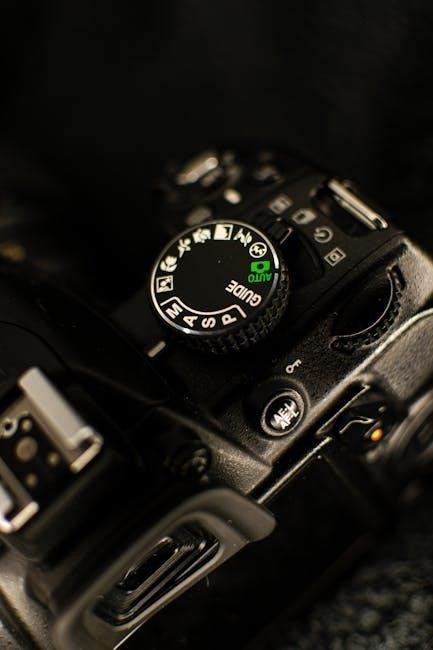
The D200 manual details how, in M mode, the photographer must independently set both aperture (controlling depth of field) and shutter speed (controlling motion blur and exposure). Utilizing the camera’s built-in light meter is crucial for achieving proper exposure, adjusting settings until the meter indicates a balanced reading. This mode allows for consistent exposure in tricky situations, like when shooting in fluctuating light or utilizing studio strobes. The manual emphasizes practice is key to mastering this powerful, yet demanding, shooting mode.
Menu System and Customization
The D200’s menu, detailed in the manual, allows extensive customization of camera settings, offering photographers tailored control over various functions and preferences.
Navigating the D200 Menu
The Nikon D200’s menu system, as thoroughly explained in the user manual, is logically organized into several categories, facilitating efficient access to a wide array of settings. These categories encompass setup, shooting, custom settings, retouching, and more, each containing numerous options for fine-tuning the camera’s behavior.
Users navigate the menu using the multi-selector and rotary dials, allowing for quick scrolling and selection. The LCD screen provides a clear display of menu options and current settings. The manual emphasizes understanding the hierarchical structure of the menu, as some settings are nested within submenus.
Furthermore, the D200 allows for personalized menu customization, enabling photographers to prioritize frequently used settings for faster access. This feature, detailed within the manual, significantly streamlines workflow and enhances the overall shooting experience. Mastering the menu system is crucial for unlocking the full potential of the D200.
Custom Function Settings
The Nikon D200’s extensive custom function settings, detailed in the manual, empower photographers to tailor the camera to their specific shooting preferences and workflows. These settings allow modification of button assignments, control behavior, and display options, offering a high degree of personalization.
For instance, users can assign specific functions to the AF-ON button or customize the information displayed in the viewfinder. The manual highlights the importance of carefully reviewing each custom function to understand its impact on camera operation.
Saving custom settings as presets enables quick switching between different shooting configurations, ideal for varied photographic scenarios. Experienced users leverage these functions to optimize the D200 for speed and efficiency, ultimately enhancing creative control and productivity. The manual serves as a vital resource for mastering these powerful customization options.
Flash and Accessories
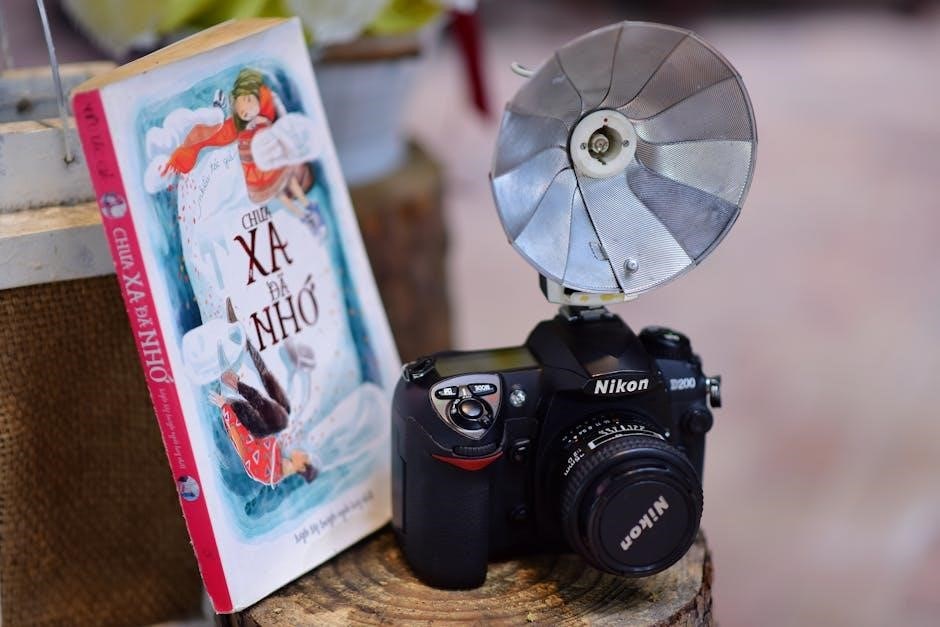
The D200 supports built-in flash features and is compatible with Nikon Speedlights, including the SB-9XX line, as detailed in the manual.
Built-in Flash Features
The Nikon D200’s integrated flash provides versatile illumination options for various shooting scenarios. The manual details several key features, including multiple flash modes like Auto, Auto with Red-Eye Reduction, Fill-Flash, and Manual. Users can adjust flash exposure compensation to fine-tune the intensity of the built-in flash, ensuring properly exposed images in challenging lighting conditions.
Furthermore, the D200’s flash offers rear-curtain synchronization, allowing for creative light painting effects. The manual explains how to utilize flash exposure lock (FEL) to maintain consistent flash output across multiple shots. It also covers the use of the flash as a master control for wirelessly triggering compatible Nikon Speedlights, expanding creative possibilities. Understanding these built-in flash features, as outlined in the D200 manual, empowers photographers to achieve professional-quality results even without external lighting equipment.
Compatibility with Nikon Speedlights
The Nikon D200 demonstrates extensive compatibility with Nikon’s Speedlight system, detailed within the camera’s manual. It functions effectively with units used since the company’s initial flash introduction, offering advanced wireless control. Professionals often view the D200 as akin to a compact version of the SB-9XX line, supporting both master and remote functionalities.
The manual explains how the D200 can wirelessly command multiple Speedlights, creating sophisticated lighting setups. It details the use of Commander mode, allowing photographers to adjust flash settings remotely. Compatibility extends to features like Advanced Wireless Lighting (AWL), enabling precise control over flash groups and channels. Understanding these capabilities, as described in the manual, unlocks the full potential of Nikon’s Speedlight ecosystem, providing photographers with versatile and powerful lighting solutions.
Maintenance and Troubleshooting
The D200 manual guides users through essential cleaning, proper storage, and offers solutions for common issues encountered during operation and repair procedures.
Cleaning and Storage
Maintaining your Nikon D200, as detailed in the user manual, requires careful attention to both cleaning and proper storage practices to ensure longevity and optimal performance. Regularly use a blower to remove dust from the sensor, avoiding direct contact. Gently wipe the exterior with a soft, dry cloth.
For the viewfinder and LCD screen, employ a lens cleaning tissue. Store the camera in a cool, dry place, ideally within a camera bag to protect it from dust, moisture, and physical impacts. Remove the battery during prolonged storage to prevent potential leakage or corrosion. The manual emphasizes avoiding harsh chemicals or abrasive cleaners, as these can damage the camera’s finish and internal components. Proper care, guided by the D200 manual, will preserve its functionality for years to come.
Common Issues and Solutions
The Nikon D200 manual addresses potential issues users might encounter. If autofocus malfunctions, verify lens compatibility and clean the contacts. Error messages often indicate specific problems; consult the manual’s troubleshooting section for detailed explanations and remedies. Slow performance can sometimes be resolved by clearing the camera’s memory and formatting the card.
If the camera fails to power on, check the battery charge and compartment contacts. The manual also notes that image quality concerns may stem from incorrect settings or a dirty sensor. For more complex problems, the repair manual suggests professional servicing. Remember to always back up your images regularly to prevent data loss, a practice reinforced throughout the documentation.
Leave a Reply
You must be logged in to post a comment.